
Psoriasis is a chronic disease in which the skin becomes inflamed and dry, thickened and covered with silvery scales. It can also be itchy, red and uncomfortable. Because psoriasis can flare and then improve, following a skin care routine is an important part of everyday management.
An oil for psoriasis is a good addition to such a routine. A good topical oil can provide needed moisture, soften dry scales and make psoriasis-prone skin feel more comfortable. While an oil won't cure psoriasis, it can be an important part of regular skin care for controlling dryness and scaling.
Why Does Psoriasis Skin Become Dry and Scaly?
- Healthy skin renews itself constantly. But in psoriasis, the production of skin cells accelerates abnormally. This leads to a buildup of cells on the surface of the skin, creating the telltale thick, scaly patches of psoriasis.
- These areas can also lose moisture and become rough or uncomfortable. Scratching, vigorous rubbing, very hot water and harsh cleansing can also aggravate sensitive skin prone to psoriasis.
- Thus, management of psoriasis involves more than treatment of visible plaques. It is also important in daily skin care to keep the skin moist enough and to scale it gently.

Why Moisturization Matters in Psoriasis?
- Dryness can make psoriasis-prone skin feel tighter, rougher and more uncomfortable. Dry areas can be softened and the skin made more comfortable by maintaining the moisture.
- An oil for psoriasis can be especially useful for dry and scaly patches as the oil base gives an emollient effect. This helps keep the skin moisturized and may soften rough scales and make them easier to manage without vigorous rubbing.
- But all oils are not created equal. If you’re choosing an oil for psoriasis, verify that the formulation is specifically designed for psoriasis and whether it addresses issues other than surface dryness.
What Should an Oil for Psoriasis Provide?
A suitable psoriasis oil should fit easily into a regular routine while addressing the common characteristics of psoriasis-prone skin. Important considerations include:
- Moisturization for dry and rough skin
- Management of visible psoriatic scales
- Relief from itching and associated discomfort
- Management of redness and inflammation
- Suitability for consistent use as part of psoriasis management
Dr. JRK’s 777 Oil for Psoriasis

- An oil for psoriasis is generally used as part of psoriasis treatment to moisturize dry, scaly areas and improve skin comfort. The formulation and its intended use should be considered while choosing, rather than selecting an oil based on texture or fragrance.
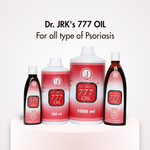
- Dr. JRK’s 777 Oil is a steroid-free, anti-inflammatory and anti-scaling oil developed for psoriasis management. It combines: Wrightia tinctoria + Coconut Oil.
- Wrightia tinctoria has been clinically proven for its role in psoriasis management, while the oil base supports moisturization of dry, scaly skin.
- Together, the formulation is intended to address important psoriasis concerns including scaling, itching, redness, inflammation and dryness.
- A routine is easier to maintain when it fits naturally into everyday activities. Using an oil for psoriasis treatment before the morning bath is one way to make skin care a regular habit.

How Does 777 Oil Work on Psoriasis-Prone Skin?
In psoriasis there is too much growth of skin cells and inflammation. Dr. JRK’s 777 Oil acts by decreasing keratinocyte proliferation, inhibiting inflammatory mediators and having antioxidant properties. This is important because psoriasis can present with many symptoms such as scales, inflammation, itching and moisture loss. Clinical trials have shown a significant improvement in scaling, plaque thickness, itching and erythema in a 12-week study of 30 people.
Using 777 Oil as Part of a Daily Routine
- Since psoriasis is often cyclical with periods of improvement and relapse, consistency is key in treating it.
- Step 1: Apply Dr. JRK’s 777 Oil for psoriasis on the psoriasis-affected areas in the morning. Spread it gently don't rub hard or try to pull off scales with your fingers.
- Step 2: Expose the area to sunlight for 10 minutes (optional). Don’t get sunburned.
- Step 3: Wash gently while bathing with psorolin derma skincare soap (PDSS). Use lukewarm water and don’t scrub too hard, or else the skin can get drier and more irritated.
- Step 4: After bathing, pat the skin dry with a soft towel. Rubbing vigorously can irritate psoriasis-affected skin unnecessarily.
Conclusion
People with psoriasis, a chronic condition that calls for careful management, often struggle with dryness and scaling. Regular moisturization, gentle cleansing and attention to affected areas are key. Dr. JRK’s 777 Oil is a clinically tested oil for psoriasis. More than a basic moisturizer, it is a non-steroidal, anti-inflammatory and anti-scaling product. This oil helps with scaling, itching, redness, inflammation and dryness of skin. Dr. JRK’s 777 Oil is a key component of the management of psoriasis, assisting in the relief of dry, scaly skin treatment as part of a regular skin care routine.
Frequently asked questions (FAQs)
1. Why is oil useful for dry and scaly psoriasis skin?
An oil for psoriasis keeps affected areas moisturized, softens dry and rough skin and makes scaling easier to manage as part of a regular skin-care routine.
2. What is Dr. JRK’s 777 Oil?
Dr. JRK’s 777 Oil is a non-steroidal topical formulation for psoriasis. It is intended for managing scaling, itching, redness, inflammation and dryness associated with psoriasis.
3. Should psoriasis scales be removed before applying oil?
Avoid forcefully scratching, picking or pulling off scales. Gentle skin care is preferable because aggressive scale removal may irritate the affected skin.
4. Should oil for psoriasis be stopped when the symptoms are reduced?
Psoriasis can go through periods of improvement and recurrence. Maintaining a consistent skin-care routine, including during remission as advised, can be important for ongoing management.
5. Can hot water make psoriasis skin feel drier?
Yes. Very hot water can increase dryness and irritation. Lukewarm water and gentle bathing are generally more suitable for dry, psoriasis-prone skin.
6. Does stress have an effect on psoriasis?
Stress is a commonly reported trigger for psoriasis flare-ups in some people. Maintaining adequate sleep, physical activity and suitable stress-management habits can complement regular psoriasis management.
7. Can psoriasis occur on the scalp as well as the body?
Yes. Psoriasis can affect different areas, including the scalp, elbows, knees and other parts of the body. The appropriate product and routine may differ depending on the affected area.