
Psoriasis is a chronic immune mediated inflammatory disease which can result in periods where symptoms are relatively calm and periods when they become more noticeable. These periods of increased activity are often referred to as psoriasis flare ups.
A flare can include increased scaling, redness or discoloration, itching, dryness, thicker plaques, or the appearance of affected areas in new locations. Psoriasis flare ups can occur for a number of reasons however psychological stress is often cited as a trigger. Stress is a common trigger for psoriasis. The relationship between stress and psoriasis is complicated and can vary widely from person to person.
Understanding this relationship may allow stress management to be a useful part of an overall psoriasis management routine.
Psoriasis flare-ups
Psoriasis is an immune-mediated process that causes skin cells to grow faster than normal. In relatively stable periods the symptoms may not be so obvious. During a flare, psoriasis can become active again. A person experiencing psoriasis flare ups may notice:
- More visible scaling or plaques
- Increased itching
- Dry or cracked skin
- Increased redness or inflammation
- Thickening of existing plaques
- New affected areas
- Greater skin sensitivity
Flare patterns are really personal. What appears to be a trigger for one individual may not have the same effect on another person. Known possible triggers include stress, skin injuries, infections, some medications, weather conditions, tobacco and heavy alcohol consumption.
That is why it is often more helpful to know your own patterns than to assume that every flare is caused by the same thing.
Stress- psoriasis connection
- Psoriasis is a immune-mediated disease: Psoriasis is a immune-mediated disease, influenced by immune system and environmental factors. It is not a psychological disease caused by stress.
- Stress is known to influence inflammatory processes: Stress is known to influence inflammatory processes, but the role of stress in the onset and severity of psoriasis is mixed in the current literature.
- Some studies have suggested: Some studies have suggested the potential association of psychological stress with psoriasis, but lack of adequate evidence for a strong causal relationship has been reported in others.
- Thus stress should be considered: Thus stress should be considered a potential individual trigger for psoriasis exacerbation and not a cause.
Cycle of stress related psoriasis
- One of the tricky things about psoriasis: One of the tricky things about psoriasis is that stress and skin symptoms can feed into each other. Psoriasis may get worse in some people following a period of stress.
- Once plaques become more visible: Once plaques become more visible, the condition itself can add more emotional pressure.
- Stress can be caused by: Stress can be caused by visible plaques, continual itching, sleep disturbance, concern about appearance and the unpredictability of the next flare.
- This can become a cycle: This can become a cycle that feeds on itself. Stress can affect psoriasis and a psoriasis flare can cause more stress.
- It is important to understand this cycle: It is important to understand this cycle as psoriasis management should not have to be about what is visible on the skin.
Recognising personal stress triggers
A simple psoriasis diary can record:
- Skin condition: Changes in scaling, itching, dryness and plaque appearance.
- Stress levels: Particularly demanding days or periods of emotional strain.
- Sleep: Changes in sleep duration or quality.
- Weather: Cold or dry conditions that may affect the skin.
- Illness: Recent infections or other health changes.
- Skin injuries: Scratches, cuts, burns or irritation.

Managing psoriasis flare-ups with Dr.JRK’s 777 oil for psoriasis
- An oil for psoriasis: An oil for psoriasis is generally used as part of psoriasis treatment to moisturize dry, scaly areas and improve skin comfort. The formulation and its intended use should be considered while choosing, rather than selecting an oil based on texture or fragrance.
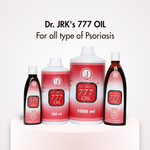
- Dr. JRK’s 777 Oil: Dr. JRK’s 777 Oil is a steroid-free, anti-inflammatory and anti-scaling oil developed for psoriasis management. It combines: Wrightia tinctoria + Coconut Oil.
- Wrightia tinctoria: Wrightia tinctoria has been clinically proven for its role in psoriasis management, while the oil base supports moisturization of dry, scaly skin.
- Together: Together, the formulation is intended to address important psoriasis concerns including scaling, itching, redness, inflammation and dryness.
- A routine is easier to maintain: A routine is easier to maintain when it fits naturally into everyday activities. Using an oil for psoriasis before the morning bath is one way to make skin care a regular habit.
- Step 1: Apply Dr. JRK’s 777 Oil for psoriasis on the psoriasis-affected areas in the morning. Spread it gently don't rub hard or try to pull off scales with your fingers.
- Step 2: Expose the area to sunlight for 10 minutes (optional). Don’t get sunburned.
- Step 3: Wash gently while bathing with psorolin derma skincare soap (PDSS). Use lukewarm water and don’t scrub too hard, or else the skin can get drier and more irritated.
- Step 4: After bathing, pat the skin dry with a soft towel. Rubbing vigorously can irritate psoriasis-affected skin unnecessarily.
Dr. JRK’s 777 Oil for psoriasis

Making Stress Management Part of Psoriasis Care
- When stress becomes persistent: When stress becomes persistent, managing it can be an important part of overall well-being, particularly for people who notice stress around periods of psoriasis flare ups.
- Astocalm Plus Tablets: Astocalm Plus Tablets are a proprietary Siddha formulation developed for stress and anxiety management.
- It is formulated with ingredients: It is formulated with ingredients such as withania somnifera, bacopa monnieri, nardostachys jatamansi, myristica fragrans, syzygium aromaticum.
- It calms mind: It calms mind, enhances brain health, improves focus and memory, regulates mood and promotes good sleep.
- Use one tablet: Use one tablet in the morning and one tablet in the night.
- The regular stress-management techniques: The regular stress-management techniques, such as meditation and yoga, to help you not get overwhelmed by stress.
- Physical activity: Physical activity such as walking or stretching can help you mentally remove yourself from the pressures of the day.
- Getting enough sleep: Getting enough sleep is an important part of feeling well, too, by maintaining a regular schedule and winding down before bed.
- Moreover: Moreover, if stress is chronic, psychological support can be helpful, besides the medical management of conditions such as psoriasis.
Astocalm Plus Tablets

Skin care is must even during stressful days
People with psoriasis need a routine, especially when they’re stressed and might want to throw regular habits out the window. Key recommendations include:
- Take soothing baths: Take soothing baths with lukewarm water,
- Don’t scrub: Don’t scrub affected areas vigorously,
- Apply moisturizer daily: Apply moisturizer daily to keep skin comfortable.
In periods of stress, it is important to keep routines manageable, to simplify routines, and at the same time, to follow prescribed treatments as directed by healthcare professionals. Stress-management strategies are not replacements for psoriasis treatment regimens.
Look Beyond Stress When a Flare Occurs
In addition to stress, other psoriasis triggers include skin injury, infections, cold and dry weather, certain medications, and other lifestyle or environmental factors. Usually there are several triggers, which is common when stress, bad sleep, erratic routines and skin care that is not a priority come together. When we think about psoriasis flare-ups, we have to think about the whole picture not just one cause.
When to seek professional guidance
- If psoriasis suddenly gets much worse: If psoriasis suddenly gets much worse, spreads to new areas, is causing considerable discomfort, or is not responding as expected to the current treatment plan, medical evaluation is important.
- Also tell a healthcare professional: Also tell a healthcare professional if you have any joint pain, swelling or stiffness, as some people with psoriasis can develop psoriatic arthritis.
- It is recommended: It is recommended that a dermatologist’s evaluation is needed especially when psoriasis is extensive or when there is joint pain.
- A healthcare provider: A healthcare provider can also assist in distinguishing a psoriasis flare from another skin condition and if the current treatment regimen should be modified.
Book your online doctor consultation

A Balanced Approach to Psoriasis Flare Ups
- It’s known that stress: It’s known that stress is an important factor in psoriasis management, but its effect differs from person to person.
- People should learn their own patterns: People should learn their own patterns instead of assuming every flare-up is stress. Long-term psoriasis management includes good skin care, proper medical treatment, keeping track of triggers, adequate rest, and realistic stress management techniques.
- Viewing psoriasis as a chronic disease: Viewing psoriasis as a chronic disease requiring ongoing care can help you establish habits conducive to healthy skin and overall wellness.
Conclusion
Stress is associated with psoriasis flare-ups, so it is important to take care of your physical and emotional health. Getting enough sleep, stress management and following skincare routines regularly are important factors in long-term management. Dr. JRK’s 777 Oil is a blend of Wrightia tinctoria and coconut oil that is useful for psoriasis care and Astocalm Plus Tablet is useful in stress management. It’s important to know your triggers and to stay on top of your management strategies to be able to successfully manage psoriasis.
Frequently asked questions (FAQs)
1) Can stress cause psoriasis flare ups?
Stress is believed to be a trigger for psoriasis flare ups in some people. However, psoriasis is an immune-mediated condition and stress is just one of many factors that may influence the activity of symptoms.
2) What are the common signs of a psoriasis flare up?
A flare may involve more noticeable scaling, itching, dryness, redness or discoloration, thicker plaques, or changes in previously stable areas of skin.
3) Why does psoriasis sometimes worsen during stressful periods?
Stress can impact the hormonal, nervous and immune responses of the body. It can also affect sleep and daily routines which may play a role in changes to psoriasis symptoms for some people.
4) Can managing stress prevent psoriasis flare ups?
Stress management does not mean a flare will not happen, because there are so many triggers for psoriasis. But managing stress with adequate sleep, relaxation, exercise and other healthy routines can be an important part of overall psoriasis management.
5) What is Dr. JRK’s 777 Oil used for?
Dr. JRK’s 777 Oil is a steroid-free anti-inflammatory & anti-scaling formulation with Wrightia tinctoria & coconut oil. It is indicated for the management of psoriasis skin including care of scaling and inflammation associated with psoriasis.
6) What is the role of Astocalm Plus Tablets during stressful days?
Stress and Anxiety Management Formulation Dr. JRK’s Astocalm Plus Tablets They should be taken as directed by a physician and can be considered part of a total approach to managing stress when appropriate. These are not a treatment for psoriasis or psoriasis flare ups.
7) Should psoriasis care be stopped once the flare improves?
Psoriasis is a chronic condition, so ongoing skin care and the treatment plan prescribed by a healthcare professional should not be discontinued just because symptoms are no longer visible.